
Reduction of vision
Reduced vision affects a great many people. You might see less clearly up close, in the distance, or notice that images look slightly distorted. We track down the cause and propose the treatment that suits you.
Common forms of vision impairment include:
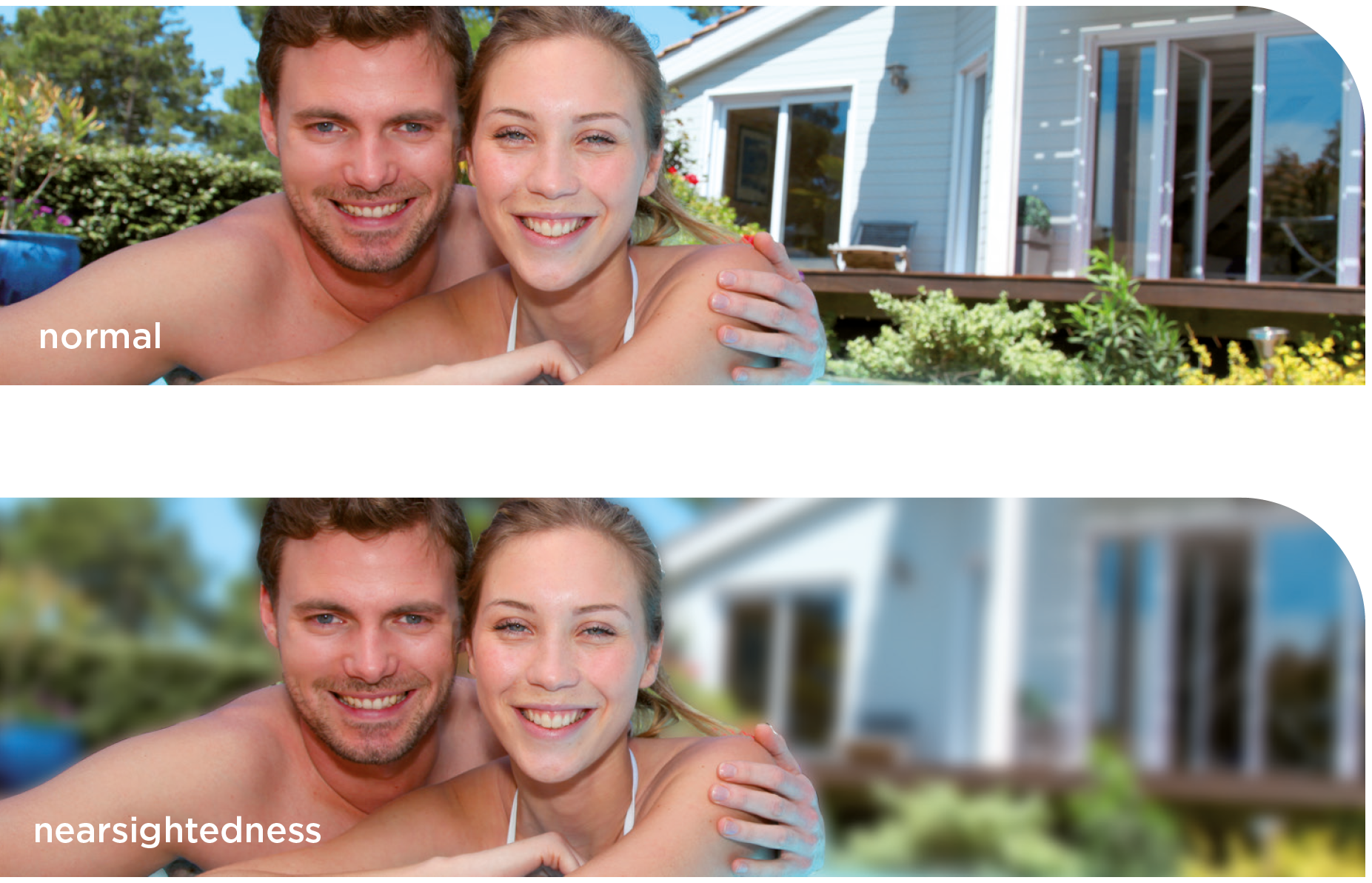
- Nearsightedness - You see sharply up close, but the distance turns blurry.
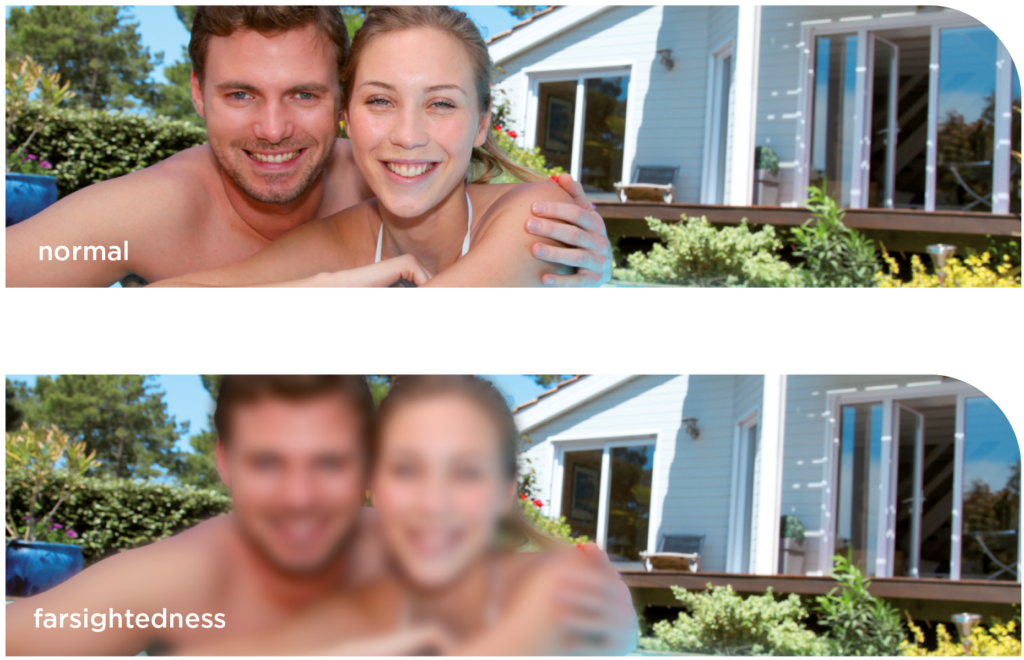
- Farsightedness - You see sharply in the distance, but up close turns blurry.
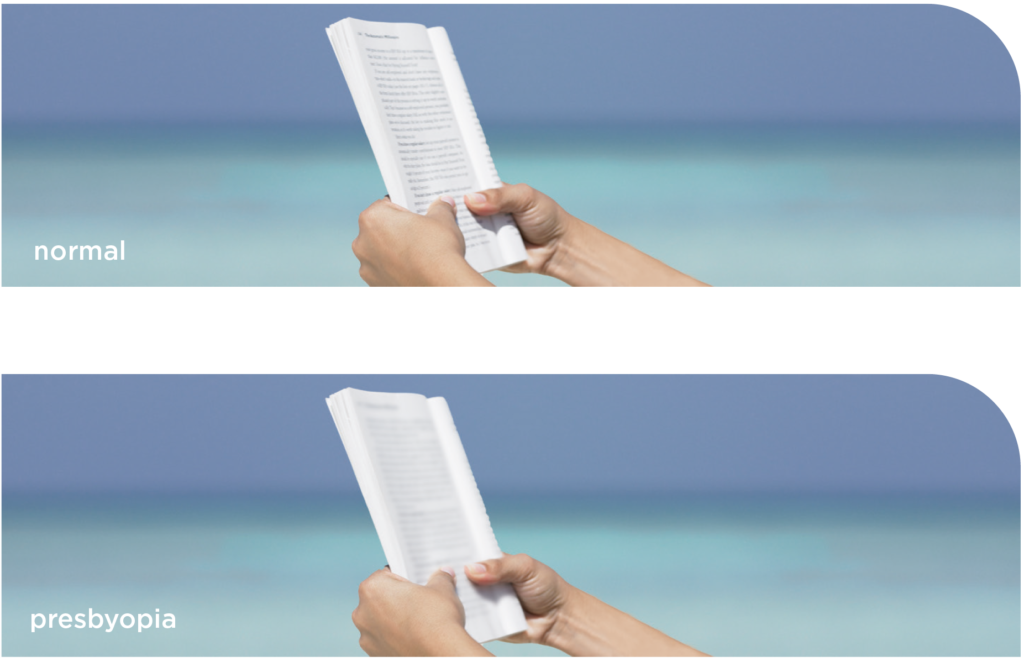
- Presbyopia - From the age of 45, reading up close becomes harder as your lens has lost suppleness.
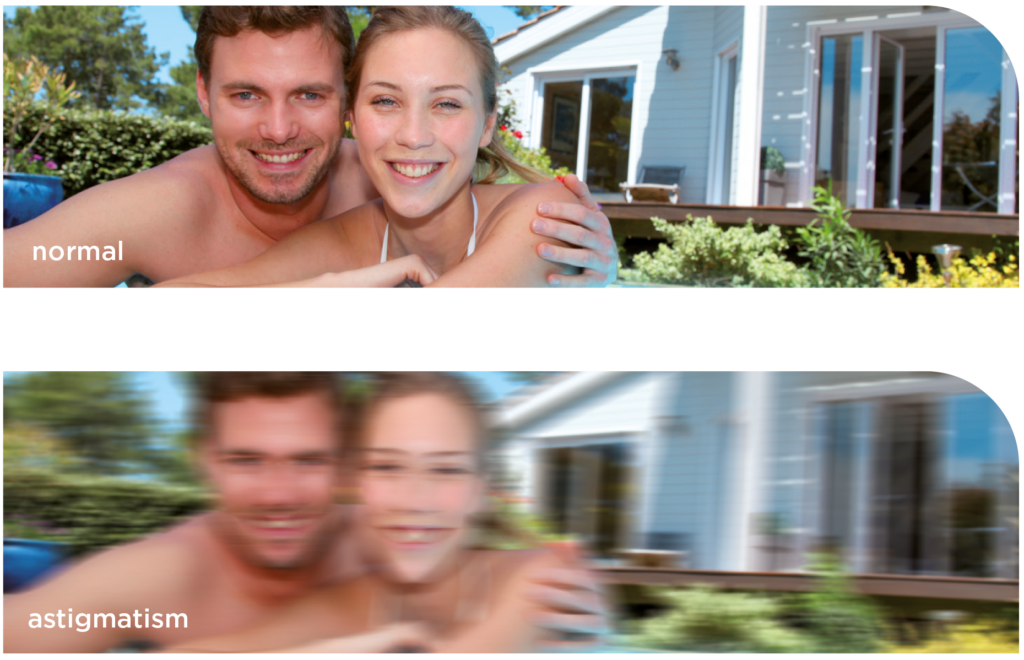
- Cylindrical divergence or astigmatism - The image appears distorted.
Nearsightedness
- What is nearsightedness?
Nearsightedness, or myopia, means you see sharply up close but everything in the distance turns blurry. The cause lies in a refractive error of the eye. Normally, the cornea and lens bend light so that a distant image falls sharply on your retina. If your eye is too long or your lens too strong, that distant image does not land sharply on the retina. People who are nearsighted therefore need a minus correction to see clearly far away.
Nearsightedness is partly hereditary: if one of the parents has it, the child is more likely to develop it too.
Environmental factors also play a major role in how it arises and progresses.
From a strength of -6 dioptres, we speak of high myopia.
Nearsightedness usually develops between the ages of 6 and 12 and increases as the eye grows and lengthens. Once a child reaches adulthood, the error generally stays stable. Worldwide, myopia in children is becoming more and more common: heavy screen and smartphone use, together with reduced or insufficient natural daylight, has driven a sharp rise in recent years, and at ever younger ages. Besides the dependence on glasses, that increased eye length also raises the risk of other eye diseases.
• Slowing nearsightedness in children
You can slow nearsightedness in children by
- limiting close-up work (reading, tablet, smartphone, crafts)
- encouraging them to look into the distance more often
- spending as much time outdoors in daylight as possible.
A handy rule of thumb here is the 20-20-2 rule:
- After 20 minutes of uninterrupted close-up work
- look into the distance for at least 20 seconds
and make sure to spend at least 2 hours a day outdoors in daylight.
On top of that, have your child read at a distance of more than 30 cm.
Treatment of nearsightedness in children
Besides prevention, nearsightedness in children can also be treated. The first step is prescription glasses. If the increase is faster than normal, diluted atropine can help as a second step. It relaxes the eye's focusing muscles. Your child then puts one drop in each eye every evening before going to sleep.
With high myopia (-6 dioptres or more), the eye stretches further and further, which thins the retina. From your forties, this can lead to additional problems, such as a detachment of the vitreous or retina, or wear of the macula, the yellow spot in the centre at the back of the retina. The risk of cataract or glaucoma is also higher with high nearsightedness.
- Treatment of nearsightedness
Your ophthalmologist prescribes the right glasses or contact lenses to correct the error.
As an adult, you can also choose to leave glasses or lenses behind. As an eye centre, we offer all the existing solutions: laser treatment, an additional lens implant or a lens replacement. Together, we choose what best suits your eyes, your wishes and your daily life and work.
Farsightedness
- What is farsightedness?
Farsightedness, or hypermetropia, means you see better in the distance than up close, while everything nearby looks blurry. With strong farsightedness, your distance vision can fall short without correction too. The cause is again a refractive error. Where the cornea and lens normally project an image sharply onto the retina, in too short an eye this fails for near vision, and sometimes for distance as well. Both reading and looking far away then become harder. People who are farsighted need a plus correction.
- Treatment of farsightedness
You can opt for correction with prescription glasses or contact lenses.
If, as an adult, you no longer want to depend on glasses or lenses, we have all the treatments that exist for this: laser, an additional lens implant or a lens replacement.
Together, we decide which approach best fits your eyes, your expectations and your life and work situation.
Age-related farsightedness (presbyopia)
- What is presbyopia?
Age-related farsightedness, or presbyopia, arises because your lens gradually loses its suppleness and its ability to focus, making near vision increasingly difficult. It begins from the age of 45 and happens to everyone: even those who never wore glasses, and both nearsighted and farsighted people become presbyopic around that age.
- Treatment of presbyopia
You can opt for (reading) glasses. If you already wear a correction for distance, we add a reading section to it, in the glasses or in the contact lenses.
If you would rather not live with glasses or lenses any longer, here too we offer all the existing treatments: laser, an additional lens implant or a lens replacement. Together, we look for the solution that best suits your eyes, your wishes and your daily life.
Astigmatism or imperfect curvature of the cornea or lens
- What is astigmatism?
With a cylinder, or astigmatism, your eye is not perfectly round like a football, but rather oval like a rugby ball. For a sharp image, the cornea must be equally curved in every direction. With astigmatism, it is more strongly curved in one direction than another, so the image becomes stretched: a dot, for example, is seen as a short line. As a result, you see less sharply both far away and up close. Astigmatism often goes hand in hand with farsightedness or nearsightedness.
- The treatment of astigmatism
You can opt for prescription glasses. The cylinder can be added to your glasses correction or to your contact lenses.
As an adult, you can also choose to say goodbye to glasses and lenses. As an eye centre, we offer every available treatment: laser, Allotex, an additional lens implant or a lens replacement. Which is most suitable we decide together, taking into account your eyes, your wishes and your living and working circumstances.